
Will AI Replace Stop-Motion Animation?
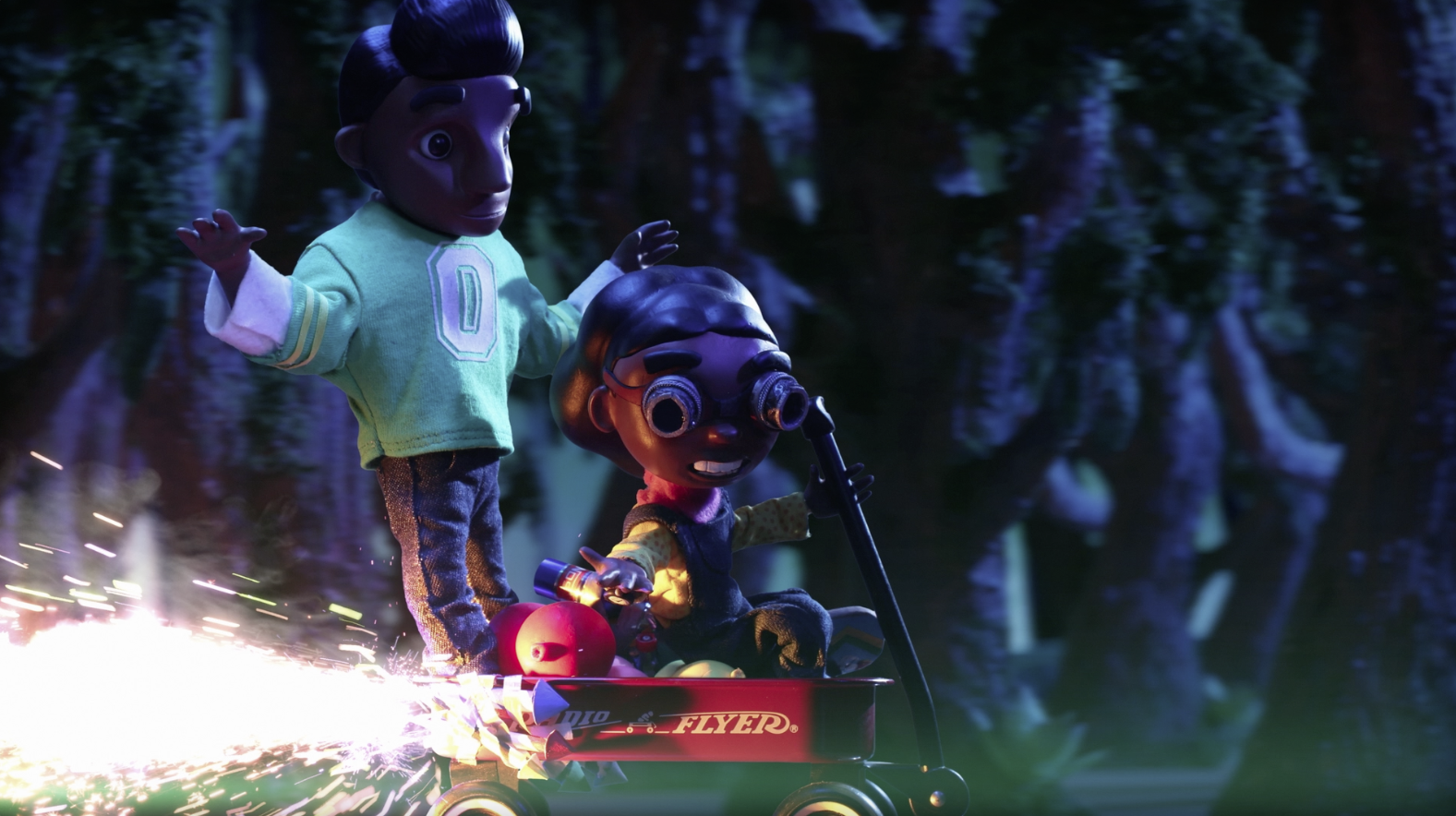
We took our film Weirdos and had an AI filmmaker recreate a scene.
Our studio spent years producing our animated film, Weirdos, which is about middle school monster hunters saving their town from a monster invasion. It’s played in theaters worldwide. It cost me 4 years and 10,000 hours of work by animators, artists, and post-production professionals. The recent inception of AI generation got me thinking: how would AI compete against my passion project? I asked my AI Filmmaker friend Matthew Boehling to assist with this thought experiment.
What We Did:
We sent 2 screenshots of our short film, Weirdos, to Matthew. He ran it through a series of image generators and video generators. He specifically limited himself to roughly 10 minutes of work on this before sending the final product.
What Worked About the AI Version:
Significant amount of time saved (10,000 hours vs. 10 minutes)
Tito’s clothing flaps in the wind as the Radio Flyer races through the forest
The wheels rock as it drives
The AI handled the set extension with ease
What Didn’t Work:
The logo on the Radio Flyer changed to Fluid Flyer without being prompted to
Tito was given an extra finger in some shots
The firework rockets were mangled
The sparks and fireworks were inconsistently placed on the Radio Flyer from shot to shot
Sure, it’s hard to argue against the time saved. In a world where everything is about speed and 1 Day Prime Shipping, people want content fast. But, does speed equal entertainment, though?
The AI generated version of Weirdos lacked artistic flair, has inconsistency in design elements, control and character. When artists are involved, we make decisions calculated by thousands of hours of study and practice on elements such as character poses, or emotions via facial expressions. AI only knows what has been trained. It can’t be spontaneous or genuine in the way a human artist can be.
Why Stop Motion?
Stop-motion animation is a tactile art form. It requires collaboration, an understanding of the art form, and an ability to sacrifice thousands of hours for something beautiful that may not result in financial gain. With stop-motion, human artists are he pilots of every decision.
On top of that, stop-motion is an inherent investment in the arts. 10,000 hours of work means artists get paid for those hours. There’s a real economic impact for our crew and talent. People benefit, not only monetarily but artistically. Art is rarely profitable. So many people across the world do it because they love it, knowing they’ll never make a dime off of it. Being able to pay artists to do what they love is a privilege, and helps keep stop-motion animation alive.
The Moral Implications of AI Generated Animation
There are some moral complications with AI generation. The most well known one, of course, is the notion of stolen artwork. AI generation works by making images based off of what the generator has seen before. This means that in order to generate a scene of our short film, Weirdos, we had to provide example images first. In our case, we gave it permission to do so. Unfortunately, a lot of AI generators have been given unauthorized access to an unlimited wealth of artists’ work. Some are calling it the “greatest art heist in history”.
We believe that major companies in entertainment need to ensure that artists are properly compensated for their work, and that they are protected in the case of unauthorized use of their work. The big studios must set the standard to prevent AI generation from running unchecked.
If you’re interested in a more in-depth discussion about stop-motion animation and AI filmmaking, check out the latest episode of the Make It Till You Make It podcast!
