
How to Make an Indie Feature Film
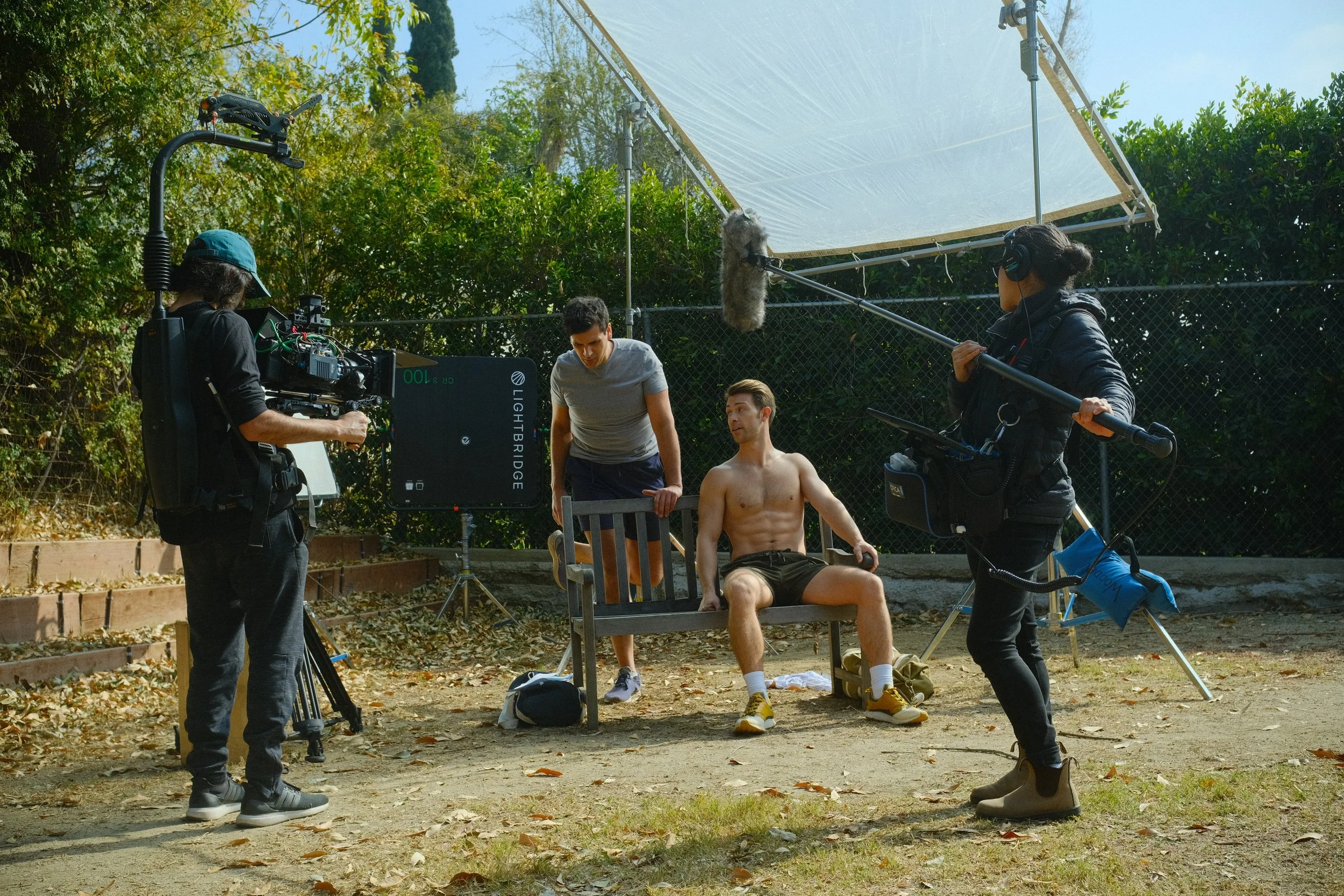
Can you produce three feature films on micro-budgets and stay happily married?
At Digital Wizards Studios, we make animated indie short films. While on the festival circuit we made friends with the ultimate indie power couple, Rosie Grace and Nate Hapke from small/TALL Productions. They are fresh off the set of their third micro-budget feature film, “We’re Bad at This”, and Rosie is sharing the inside scoop on her directorial debut, “Lucy’s Last Dance” which is set for a world premiere on the festival circuit later this month!
If you’ve ever felt like the budget was holding your story back, this is for you! We pull back the curtain on indie filmmaking—including practical “golden insights” that will save you thousands of dollars (and even more hours) on your next production. Let’s empower each other and keep the indie film scene thriving! We’ll see you on the festival circuit!
Where to begin?
What do you do if you really want to direct but you’re fresh out of college and aren’t a “nepo baby”? Nate’s approach was to make his own short films with intimate casts and crews of friends on a micro-budget. That eventually grew into feature films with larger crews and longer shooting schedules—10.5 days! But how do you manage a long shoot with a crew of under 100 people?
You start with using what you already have. Do you know someone with a backyard that could be turned into a park? Or maybe someone who owns a bar that would let you shoot while they’re closed? Write your story in a location you have easy (and ideally free!) access to.
The best cast and crew when you don’t have a lot of money will be your friends in the industry. Do you know any actors starting out who need to bolster their reel? Maybe your roommate from college has lighting equipment and wants to work on their skills on a real set. Ask for their help. Figure out who you like working with, because it’s very likely you’ll need them again for your next project!
One of the best tips on getting started that Nate and Rosie gave was how to prioritize your budget when choosing what appears on-screen. It comes down to two questions:
Does this cost money?
Do I need this to tell my story?
If the answer to 1 is yes, but 2 is no, then you don’t need it. Don’t waste money on anything that doesn’t impact your ability to tell a compelling story!
Want to listen to the full conversation with Rosie and Nate? Check out the video podcast here!
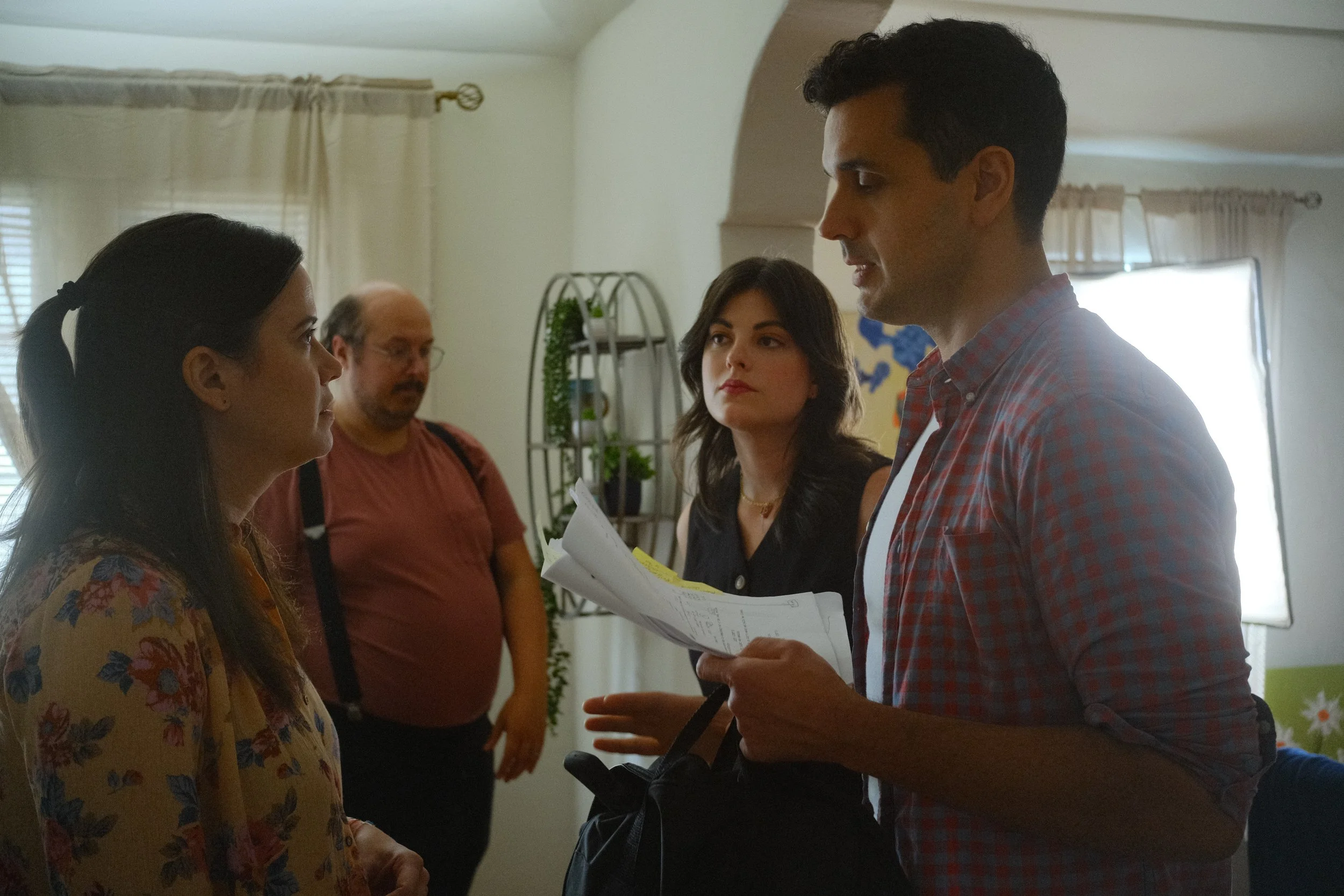
What if you want to act in your own film?
Treat your actor self as just another member of the cast. If you want to get the film done on time and on budget, you can’t give yourself special treatment.
Nate’s approach when he acted in his own micro-budge feature film was to stick to a “3 Takes” rule for every actor, including himself. If everybody has the same allotment, nobody feels disrespected and will continue to put their best foot forward until the production wraps.
Listen to the people on your crew! Collaboration is one of the most important aspects of filmmaking at any level. You brought people onto your film because you trust them. Don’t do them a disservice by trying to control everything yourself.
Learn how to give notes!
At some point in the creative process you will either be asked to give notes, or will ask someone else for notes. It’s extremely important that you understand the right and wrong way to do it! Let’s look at a few examples. Which one do you think is a good note?
I think the romantic subplot is too awkward, you should re-write it or remove it. I also really don’t like the ending. It’s very cliche.
I really like your opening scene! It feels fresh and gives me a great idea of what kind of story you want to tell. You could flesh out the inciting incident more, though. I want to know more about the main character before we get to it so I care about them more.
If you think the answer is 2, then you’re correct! When you give a note, you should start with a compliment. Make sure the person knows that what they’ve created has some positive elements to it before you get into what you think needs some work. People become attached to their creative work, so you need to make sure you frame your note from a positive angle.
1 is unnecessarily negative and focuses entirely on what you think is wrong with the story. No one wants to hear that you hate everything they wrote. You won’t get through to people if you frame your notes this way.
Everyone is different! Learn about the people you work with and what kind of note works best with them.
A micro-budget feature film still requires a budget!
How do you secure funding for your film? Rosie and Nate go over a few options.
Self-Funding: This is the place to start. How much are you comfortable spending on a project that may not get you any returns?
Crowdfunding: This is a great way to fund indie feature films. Plenty of people donate to Kickstarters because they just want to support the arts.
Private Equity Investments: People may want to invest with the promise of a share of the profit for your film. This can be a hard route to go down early in your career, but it certainly becomes an attractive option once you establish yourself.
Grants: Sometimes you can receive money from a state for filming there, or earn a grant through an organization that frequently supports indie filmmakers. Look into your options, you never know where you’ll find help!
Fiscal Sponsorship: As Rosie puts it, this essentially turns your production into a non-profit organization. This means that anyone who donates money to your project can write it off on their taxes and get something back from their investment.
When Rosie and Nate wrote “We’re Bad At This”, their latest micro-budget feature film, they took a creative budgeting route. The script was structured so they could schedule 1-2 shoot days at a time every couple of months in order to raise money gradually. This allowed them to put less pressure on securing the entire budget all at once and focus more on creativity.
Safety is paramount!
If you don’t take care of your cast and crew, no one will want to work with you again. Never compromise their safety and wellbeing to save a buck. These are some important things you should never cut corners on:
Food: This is the bare minimum. You must feed your cast and crew, even if they have all agreed to work for free. No one wants to work on an empty stomach, and you’ll have a happier and more productive group if you fork over some cash for crafty (don’t forget the coffee!").
Stunts: If you plan on having any stunts in your film, especially ones with weapons, you need a stunt coordinator and you must follow all legal protocols and procedures regarding weapons on set. Don’t risk the safety of your cast and crew just because you didn’t want to pay an extra person.
Location Permits: You don’t always need permits for indie filmmaking, but you should recognize when it’s necessary. Maybe you don’t need one to film in your friend’s backyard, but what about in a crowded public space where you need an actor to walk in the road? Get a permit.
Respect: Personal wellbeing is an often-overlooked aspect of safety. Make sure you follow a definitive “No A-Holes” policy when hiring for your production. If anyone is disrespectful or makes someone feel uncomfortable, they need to go. Try to hire diversely! People are naturally more comfortable when they recognize others like them, and will likely have a more enjoyable experience if they feel inherently comfortable on your set.
What can film festivals do for you?
Film festivals are an amazing option to distribute your film and get more eyes on your work. Is it a guarantee to get you an agent and a larger budget moving forward? Unfortunately, no. What it can do is provide an opportunity to meet likeminded filmmakers and learn from each other. It’s always good to grow your network!
Maybe you need a stunt coordinator for the first time and you meet one at a festival, or someone needs post production help and you can give them the email of an editor you like working with. Or maybe you just need motivation to keep going. Interacting with other filmmakers in a similar position to yourself can be a great source of inspiration!
At the end of the day, festivals are a great way to network and to get your film seen. It might not sound like the biggest accomplishment, but a theater of even 20 people watching your movie is a big deal!
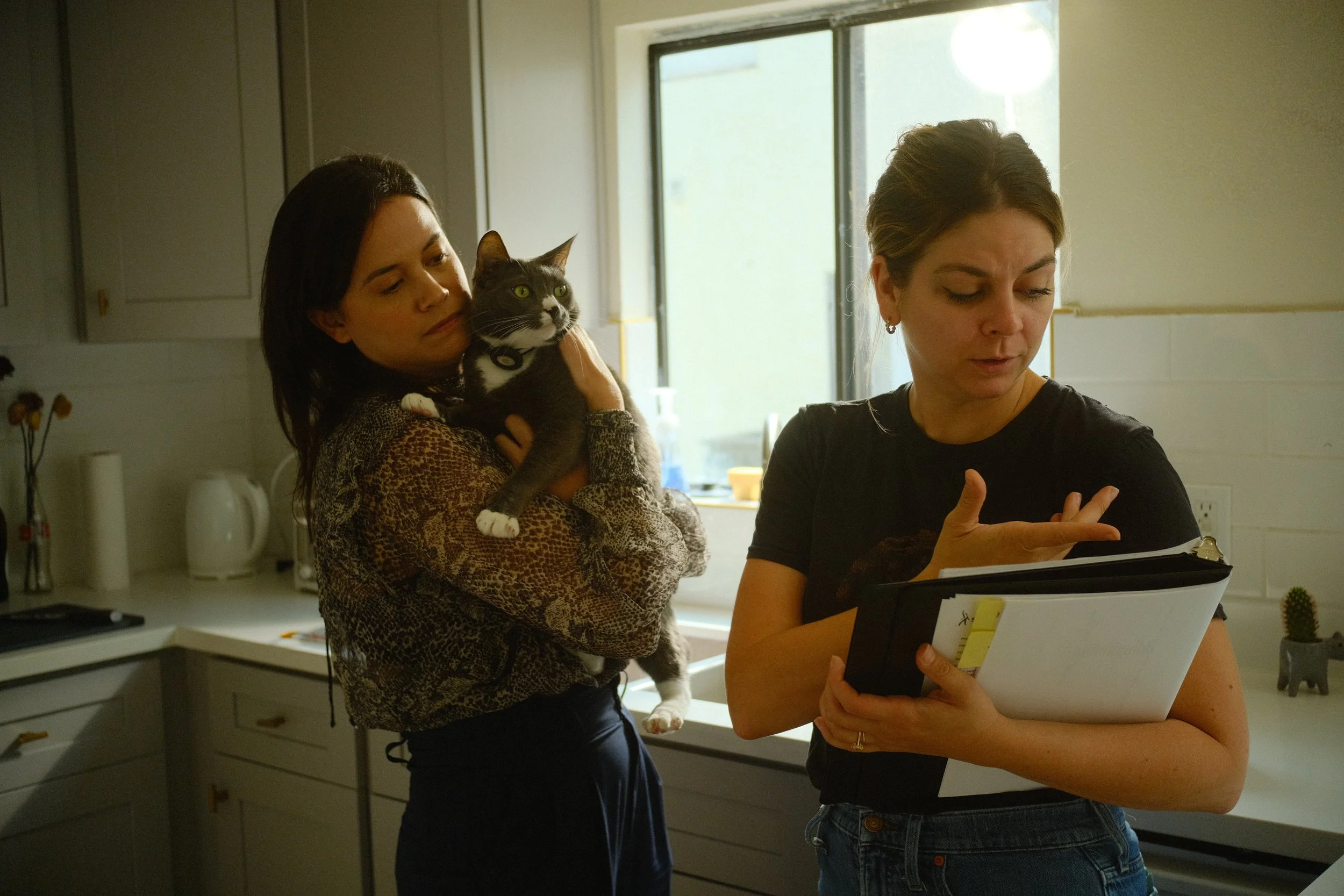
What’s it like to direct for the first time?
Rosie took a giant leap—her directorial debut, “Lucy’s Last Dance”, premieres on the festival circuit later this month! Before “Lucy’s Last Dance”, she had never directed before—she didn’t think she could! But when her friend told her a story about a sad yet cathartic goodbye party for her cat, Lucy, she unlocked a part of her brain she didn’t know she had.
Rosie described intimidation at the thought of visualizing the finished product. Knowing how a scene will cut together when you’re shooting it or how to pick the type of shot you need escaped her. Inspiration can come from the most unlikely places, though! As her friend told the story, she could picture a dramatized version and started thinking of how to shoot it as a short film. Suddenly, she was doing the exact thing she thought was impossible just a few hours earlier.
If you feel intimidated by directing, you aren’t alone. Some people are naturally inclined towards it. Others, like Rosie, need the right story to feel inspired and know what they want to make for the first time. Keep working, you may come across your “Lucy’s Last Dance” when you least expect it!
We offer creative services from concept to completion! Book a call today!
